Fresh fruit and vegetables (F&V) is a key sector in the Spanish agriculture. With an annual production of around 20 million tons, it has an economic value of 14 million Euros, contributing to 47% of the value of the Spanish plant production and 29% of the whole agricultural production (MAPA). However, inefficiencies within the F&V supply chains appear in the…
The environmental impact study based on the Life Cycle Analysis carried out by the UNESCO Chair of ESCI-UPF and published in the scientific journal Resources, Conservation and Recycling revealed the advantages of this system. The life cycle analysis of the boxes will allow further improvement of their environmental performance.
The researcher of the ARECO felowship is an agricultural engineer from the Universitat Politècnica de Catalunya, with an MSc from the University of Wageningen, in the Netherlands.
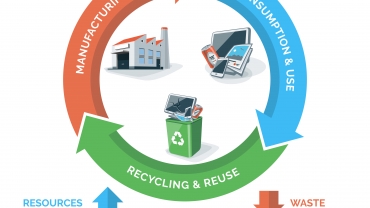
The most common industrial model is based on the extraction of natural resources to produce goods that are being consumed and finally disposed. This linear model is based on the presumption that resources availability is unlimited, and it does not consider the limits and impacts of generating waste
Reusable plastic boxes generate 25% less environmental impact than disposable cardboard boxes in the distribution of fruit and vegetables in Spain. This is the case in five of the six categories of environmental impact analysed by the comparative study of the different options for distribution of fruit and vegetables in Spain by Life Cycle Analysis (LCA) carried out by the UNESCO Chair in Life Cycle and Climate Change (ESCI-UPF), directed by Professor Dr Pere Fullana.
According to a study carried out by Fraunhofer Institute and the University of Bonn, throughout the whole supply chain for fresh fruit and vegetables, around 4% of all disposable packaging was damaged, while this figure was just 0.1% for reusable packaging. DOWNLOAD HERE THE STUDY IN ENGLISH
Around 450 scientists coming from 22 different countries gathered at the 8th International Conference on LCA Sector to discuss how to apply this methodology in food production. An adequate packaging for food and beverages is essential to reduce environmental impacts; LCA helps evaluate the most sustainable packaging.
CHEP and LPR, European leaders in pallet and container pooling services, have joined ARECO, the Association of Logistics Operators for Eco-sustainable Reusable Items, founded in 2010 with the aim at promoting the usage of returnable crates, pallets and containers because of their logistic and environmental advantages.