All Posts

BLOG

Why reverse logistics creates value in the supply chain

Reverse logistics is “the sequence of activities required to collect the used product from the customers for the purpose of either reuse or repair or re-manufacture or recycle or dispose of it (Fig.1; Agrawal et al., 2015)”. Hence, reverse logistics is, in essence, a circular strategy (since it integrates R-strategies) and it is recently considered as a key step towards…

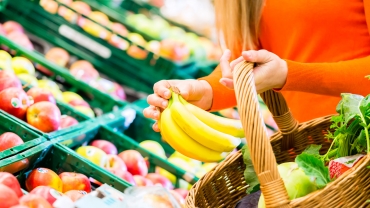
SDGs in food logistics

In 2015, the 2030 Agenda for Sustainable Development was launched after the agreement of the 193 member states of the United Nations. It is a 15-year plan of action that aims to end poverty, protect the planet and improve the lives of all the population. It has 17 objectives, the so-called Sustainable Development Goals (SDG), which are defined in a…

Food systems and climate targets

Last November took place in Glasgow the 26th UN Climate Change Conference of Parties, known as COP 26. This conference was the first one after the 2015 Paris Agreement where parties had to submit their enhanced Nationally Determined Contributions (NDCs) to rise up the ambition to mitigate climate change. NDCs are those national ambitions or goals to limit greenhouse gases…

Repairability ensures extension of life cycle of products

The transition to a circular economy aims at closing material loops in order to reduce waste, use resources more efficiently and minimize the environmental impacts. But what are the strategies that the companies can establish to achieve this? In this respect, Potting et al. (2017) apply a useful framework (Fig.1) that defines 9 R-strategies, group them in three main circularity…

Post-industrial recycling of reusable plastic crates

Plastic is a synthetic material, made from organic polymers, that has become essential in current supply chains due to its beneficial properties – light weight, durable and easily shaped – and low cost. Since the 1960s, plastic production has increased by 20 times, with a global manufacture of 360 million tonnes in 2018, 40% of which were used for packaging…